|
|
Last Modified on Feb 12, 2026
When it comes to drug crime charges in Texas, everything from drug possession to distribution can result in significant legal penalties. However, charges depend heavily on the type of drug and the amount of it found on you at the time. Having Texas controlled substance penalty groups explained can help you be better prepared when facing charges in the state.
As you navigate what may be uncharted waters regarding a drug arrest, the most important thing you can do is contact a drug crime attorney to help you determine your next steps. Without an experienced drug crime lawyer leading your case, you may not know the most effective ways to fight your charges. You need someone who understands Texas drug crime laws as they apply to you, or else your drug crime charge could end up leading to severe legal penalties.
Hire a Drug Crime Lawyer
When you are faced with any kind of drug charge, you need to hire a drug crime lawyer to help you work through it. Above all, you will want the reassurance and peace of mind that your case is being handled by the right people who know what they’re doing.
At Harris & Harris Law Group, PLLC, we have spent decades helping clients deal with criminal charges. We can bring our experience as prosecutors to your case, providing you with unique assistance.
Drug crimes are fairly common throughout the state of Texas. According to recent data from the Texas Department of Criminal Justice, there were nearly 20,000 individuals serving either prison or jail sentences in Texas for drug offenses, including possession, delivery, and other related crimes in 2024. Data from the Texas Department of State Health Services show over 1,200 fentanyl-related poisoning deaths in the state between July 2024 and June 2025.
Being associated with drug charges can be detrimental to your social status and professional reputation. In an effort to challenge the stigma that may be surrounding you due to your current situation, you may want to consider reaching out to local drug-related support groups to learn more about how drugs affect your community and what you can do to help. Local groups like Texas Recovery Center or Let’s Talk Addiction can help you be a part of community support.
Texas Controlled Substance Penalty Groups Explained
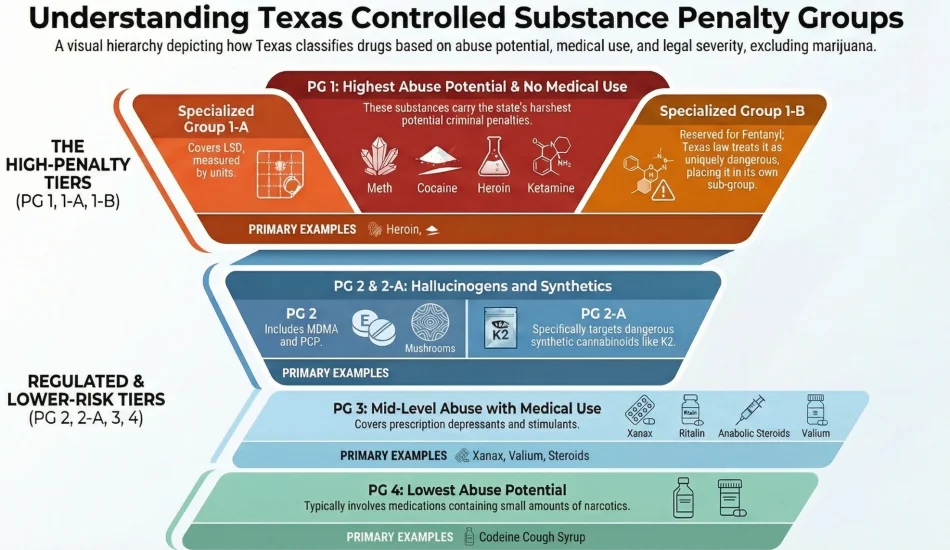
Texas state law, particularly the Texas Controlled Substances Act, classifies controlled substances in the state into seven distinct penalty groups. These groups determine the severity of the offense that involves the use, distribution, or possession of one of these substances based on the potential for abuse and recognized medical usage. Marijuana offenses are not included, as they are handled separately. Here are the penalty groups and the drugs included:
- PG 1: This group has the highest potential for abuse and has no accepted medical use. They have the harshest potential penalties if convicted. These drugs include fentanyl analogs, heroin, cocaine, methamphetamine, ketamine, oxycodone, and hydrocodone in certain amounts.
- PG 1-A: This group is reserved specifically for LSD and its derivatives. LSD is measured by units and not by weight. If you are found to be in possession of many units of LSD, the legal penalties can be severe.
- PG 1-B: This group is specifically reserved for fentanyl and various fentanyl derivatives. Fentanyl is considered a uniquely dangerous drug in Texas.
- PG 2: The drugs in this group have a high potential for abuse, but do have some accepted medical use or severe restrictions. These drugs include MDMA or ecstasy, PCP, psilocybin or magic mushrooms, mescaline, and various amphetamines.
- PG 2-A: This group is reserved solely for synthetic cannabinoids like K2 and spice. They are chemically-produced compounds made to mimic the effects of THC, which is the active ingredient in natural marijuana. The synthetic version can be far more potent and dangerous.
- PG 3: The drugs in this group have a mid-level potential for abuse and a generally accepted medical use as depressants or mild stimulants. They include anabolic steroids, Xanax, Ritalin, and Valium. Some of these drugs are legal with a prescription.
- PG 4: These drugs have the lowest potential for abuse and contain small amounts of narcotics. They include various medications that have small amounts of codeine, opium, or morphine, such as cough medicines.
FAQs
What Should I Do if I’m Arrested for a Drug Crime in Texas?
The most important thing you should do if you are arrested for a drug crime in Texas is to contact a lawyer. This should be the first thing you do once you arrive at the police station. Don’t say a word to the police. They may have less evidence against you than you think, and they may try to intimidate you into confessing. Request your lawyer.
Can First-Time Drug Offenders Go to Jail in Texas?
Yes, first-time drug offenders can go to jail in Texas. Depending on the nature of the offense, there is a strong chance that the court will offer you an alternative to jail, such as probation, a drug court program, or even deferred adjudication. However, if the offense involves drug trafficking or something far more serious than possession, you could be looking at serious prison time if convicted.
What Is a Common Defense Against Drug Crimes?
There are many possible defenses against a drug crime. Primarily, you will want a defense that challenges the prosecution’s case against you. Your lawyer can do that by questioning the legality of the search that led to finding the drugs, challenging the lab analysis of those drugs, or even claiming a lack of intent on your part.
Should I Hire a Drug Crime Lawyer?
Yes, you should hire a drug crime lawyer. It’s common for prosecutors in Texas to seek the maximum penalty for certain drug crimes as a way to deter others from engaging in similar actions. You shouldn’t take any chances. A good lawyer can be the most important element of your case.
Contact a Lawyer Today
At Harris & Harris Law Group, PLLC, we can help you build a strong defense against drug charges and help you understand the penalty group that applies to your case. Contact us to speak to someone who can help you better understand Texas controlled substance penalty groups and how to protect your future.